• Escaping the Rat Race

    Escaping the Rat Race

    I stumbled across a show from 1991 with a setting that takes place in Kent, England after WWII. Little did I know this show would change my life.

    About 12 years ago I had left a good office job because I listened to a calling I had inside. Not knowing I was in the rat race, one night I saw a documentary about a farmer, and she was showing her trees and explaining how peaceful her life has become. The next day, during my one-on-one supervision with my boss, I would set the course for my future. She asked where I saw myself in five years, if I’d like to become a social worker like my colleagues and advance in my career. I told her, in five years I see myself surrounded by Nature on my own farm. At the time I didn’t know that was not the answer she wanted to hear. I was naïve. But it was true!

    Flashing forward to one year later, I quit that job and surprisingly got hired to work for a Nature Preserve. The job required a degree in science. I did not have a degree at all. What I did have was a will. Assuming my charisma and sales skills sold the interviewer, I got hired very quickly. I was the least experienced and had the least amount of knowledge about ecology and biology, and everything else I should have known. Instead, I learned. I studied and I knew I would not do anything that would jeopardize this job. I was in love! I felt that peace I imagined the woman in the documentary having.

    A beautiful natural forest.

    A year after starting I got a promotion and a raise.

    From that moment on my life kept going deeper into nature-like positions, even managing a 20-acre farm for a couple in another state. This led me to leasing land and owning my own farm.

    But I was not successful and had to go back to the grind of a regular office job. For the next six years I did this. And I burned out. In fact, I’m in this position right now. I took the last week off to be present and to heal. I read a book that said you can discover who you are and where you need to be when you’re still. In one moment, I had the urge to scroll through my Amazon Prime account and see what shows were out there. That’s when I stumbled upon The Darling Buds of May.

    After watching the first episode, I quickly got hooked because it was portraying the idea that the rat race is not fun. It makes people bitter, stuffy, and sad. A tax collector came to a farm to see about a farmer not paying his dues. Long story short, and without giving away spoilers, the farmer is so charming and the lifestyle so welcoming, the tax collector ends up second guessing his own office life as he badly craves to live the homesteading business way.

    That’s it! That’s exactly who I am in this show! I am the one who is tired. I tasted that life and I lost it. Now I want to go back to it.

    If you’re a part of a rat race and want to get out, too, then I highly recommend you give this show a try. I spoke to my brother-in-law, who is from England, and he said there is another good show to check out: Good Life.

    Happy farming, my friends!

  • Should You Move Away from Your Family

    Should You Move Away from Your Family

    I’ve recently pondered moving away but the older I get the more I’d like to be near family. It’s strange not to move on to live out your own life. I mean, animals do that in the wild, like lions. There are stories about mothers who don’t want their children to move. It’s a stretch to accept them even living next door. Then there are mothers who themselves move away from their children. I think as humans, we’re all somewhere on one side or the other, and in-between.

    You see, my father died when I was young and it happened right when I moved to a nearby town. It wasn’t too far away, but far enough to make me realize that I could’ve seen him the days before he passed. I did not. The last time I saw him was four days prior. My siblings and mother got to see him even the hour before he left for his walk that morning, when he suffered a heart attack. It happened so fast and it forever left an impression on me.

    Our loved ones pass away. Sure, we face death in our family, but if you’ve never faced one very close to you, it’s easy to take them for granted. That’s why I’m pondering moving. I don’t like where I live. I’m here because my father brought us here and wanted a better life for us. Now that he’s gone and we’re all older, what’s keeping me? My mother will be fine; she’s got my siblings and her grandkids. Why can’t I move away? Perhaps I fear loneliness.

    I guess I’m writing this because there are people who don’t see my conflict the same way. To them it’s not a problem and I’m being sensitive, or that I’m too attached. Am I? The question has come to mind. I often wonder if my family just happens to be that rare circumstance where they guilt trip you for ever thinking of leaving. Do they? Yes, to some extent. There is a passive-aggressive comment like, “Oh that’s okay. It’s your life. You’ve got to do what you’ve got to do.” Receiving blessings is not an option from most. It gets to you.

    So yes, I have a dilemma. Do I move and fulfill my desires to finally call a place I live “home”, or do I stay and keep those I love most in this world close? Either way someone’s heart will be broken, right?

    What do you think? Are you a part of the family who encourage each other to move away and prosper or do you think family should stay near each other always?

  • Being a Grandparent is Overrated

    Being a Grandparent is Overrated

    I’ve noticed a pattern in my mother, who is 65. She does get tired often, but that’s because she keeps herself very busy. She practically has a part-time job caring for her granddaughters. She takes them to school and picks them up after school. She drives them to basketball practice and in the past, cheer practice. And she oversees their homework, gives them snacks, and supervises them until one of their parents picks them up. It’s a lot of work!

    In my opinion, being a grandparent is overrated nowadays. Not for everyone, so please don’t get upset. This is a personal perspective. Think about it, many households require both parents to work, yet for my father and my mother, they had one parent home (usually their mother). For my husband, his father worked a couple of hours per day because he owned his own business and had more flexibility. For me, my own mother worked part-time while me and my siblings were in school, which made her available for all hours we were outside of school. Today? Not the case. My sister and her husband work. She as a teacher, and he as a police officer with random and late hours.


    The pattern I’ve noticed is this, my mother is either very tired she doesn’t want to have anything to do with us, and wishes to be alone to watch her shows and enjoy her wine, or she desperately wants to hang out and shop, grab a meal out, and do some beauty care, like dyeing her hair at home.

    That’s where I come in when I provide my mother with some elderly care. I’m her shopping buddy. I’m her respite when she can’t pick up the girls. I’m the one who colors her hair at home and I’m available to grab a bite to eat somewhere. And I don’t have children.

    This may seem harsh, but I don’t need my mother. All we have is our companionship to nurture.

    I’d like to say, which I sort of know by now, that I am more of a friend than anything. My sister sees my mom as the nanny for her own kids, so she needs her for that more than she needs her as a friend. My brother lives with my mother to help around the house and what not, so they still have that mother-son relationship with shared chores and their own alone time from each other. Then there is me, the child who lives nearby but is available when my mom needs me.

    That’s one reason I think being a grandparent is overrated. We think it’s all play and cuddles, but today I believe grandparents are workers and demanded from. It makes me sad to see how tired new grandparents are. I don’t believe that’s anyone’s fault. I hope one day soon families with children will earn higher wages so grandparents can be friends with their grandchildren.

  • The Best Game for Multi-Generational Gatherings

    There’s cool trivia online where you can test your knowledge on classic films, culture, and events that happened throughout time. Some of these websites are full of ads and make it impossible to play, but others are streamlined and make family get togethers – with multiple generations – that much more fun. Last night, we found one on YouTube from a channel called Extra Medium Stuff. It’s not always about classics, but they do test knowledge on all subjects. The best part of all was that my 65-year-old mother played with us “kids” and not one person was bored.


    If you watch any of these videos, you’ll start to notice that they also use participants of various ages. That makes it interesting to see how memory and education work throughout time. You can also identify which young person has an old soul, and which elderly person stays sharp by keeping up with subjects mentioned in trivia games. Pop culture changes, but certain things don’t.


    Subjects That Change Throughout History


    Movies
    Dance Moves
    Songs
    Technology
    Economics
    Events


    Subjects That Don’t Change with Time


    Geography
    Sports
    Classic authors
    Food
    Scientific names
    Chemistry
    Mathematics


    To be fair, sure, some of these things change, but most of the time there is a common theme. For example, what’s the most sold vegetable in the world? If you guessed potato, you’re correct. What’s the most common food eaten in America? French Fries, but that could’ve been different throughout time. Perhaps it was pea salad, or liver, or meatloaf. But if you look at the breakfast plate of many Americans, especially in a place like Georgia or Alabama, you’re going to see eggs, bacon, and potatoes, paired with coffee and orange juice.


    I’m rambling here but wanted to write this because it was a good time to play trivia with my mother. She knew a lot of the current or more recent pop culture answers because of her granddaughters. And I knew how to identify the dance move The Twist, when they showed a picture of two people posed in a twisted position. Caregivers could seriously add to a senior’s life if they bring trivia into the mix of their duties. I mean, if you’re going to offer companion care to your mom or dad, why not add fun games that build their cognitive function?


    And what’s more is that you also get smarter and support your brain. How can brain work be so much fun? Everyone gets something out of this.


    Here’s a cute little story. My youngest niece is seven years old. During my brother’s birthday party, we all sat around the table outside to share stories and enjoy refreshments. My niece wanted to play the “Question Game” where she asks a question and everyone gives their answer while the rest of us listen. The questions got deep, too.

    She asked things like:

    • What’s your first memory?
    • If you had 6 months to live, how would you spend it?
    • If you had one superpower, what would it be?


    Our answers were heartfelt and my little niece also answered with emotion. We were all surprised at how adult she seemed. We often refer to her as an old soul, or “the little old lady in a kid’s body” because she is fascinated by things we mostly see adults fascinated with – like constellations, math, oil painting, crocheting, gardening, baking, you name it. This girl studies it all.

    Can you imagine a game of trivia with her and my mother competing? It’d be worth the watch! So, for me, and my siblings, as caregivers for my mother, we get the kids involved. We all play games where everyone feels included. If you’re a family caretaker, then maybe trivia is your next form of entertainment.

    Give it a try and let me know how it went! We’re going to play ours for Thanksgiving!

  • Could You Be an Ageist?

    Could You Be an Ageist?

    Within our family, we have begun to notice when the kids are disconnected and start to lose interest in the lives of our elderly loved ones. In other words, sometimes one of our senior family members will reminisce about the old days and talk about someone in our family, whom we’ve never heard of, and unfortunately – not going to hide this – sometimes it’s boring to listen to.

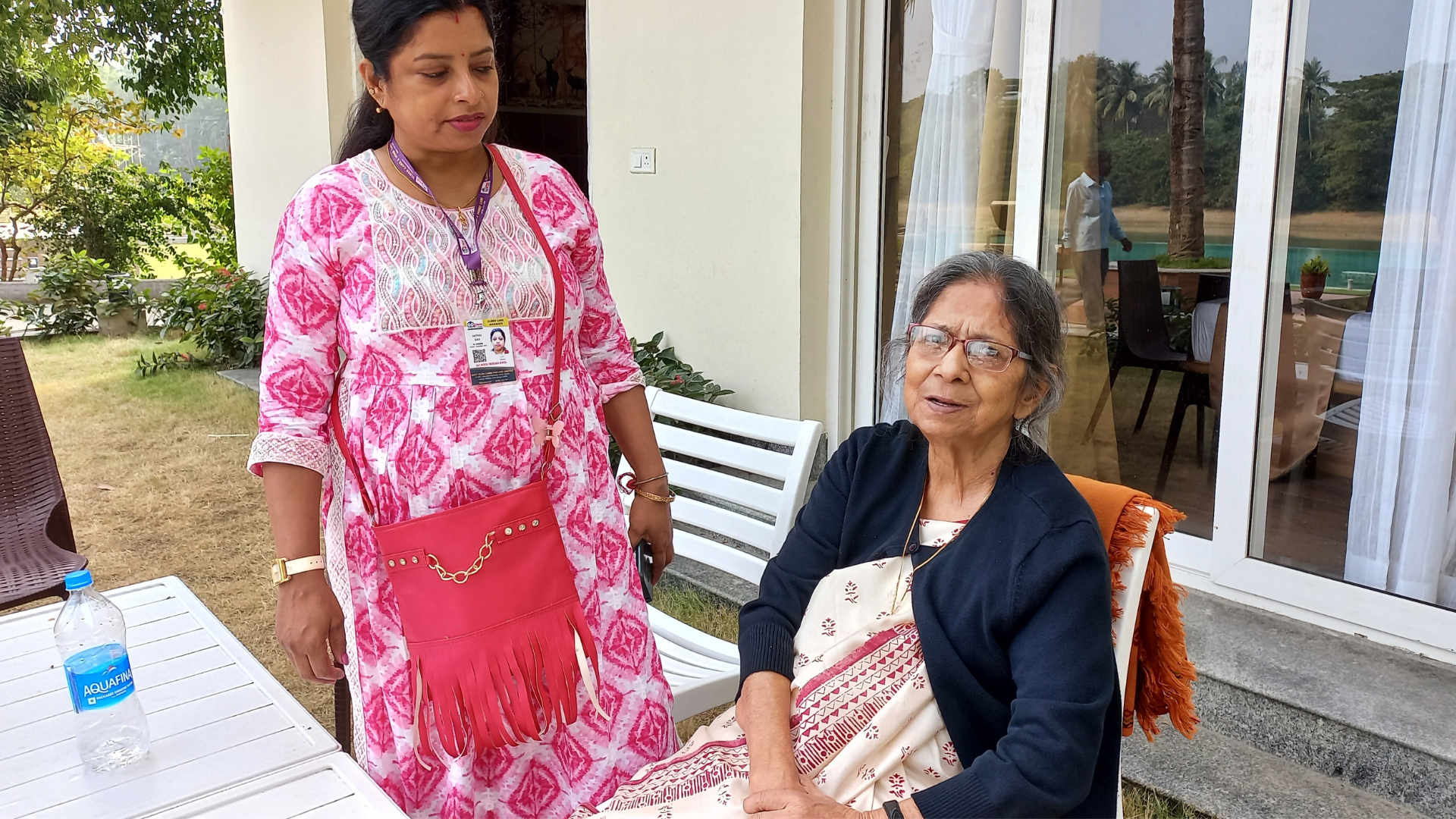
    An Indian elderly woman speaking while a younger Indian woman listens.

    Yeah, that sounds harsh. We have guilt with it. Some stories are cool and funny. Most stories we listen to just because we feel like we must. As adults, we can act engaged and humor our elders, but when we see our nieces or little cousins roll their eyes, we put our feet down. How hypocritical!


    There is a higher level of disrespect than when we were kids. It’s almost as if the senior is “in the way” of the child. The topic may not be interesting, but that doesn’t mean we turn cold and act as if that senior doesn’t matter. How rude!


    Well, it’s all kind of rude. We aren’t blatantly saying, “this story is boring! Stop telling me about someone I don’t know during a time I was not even born into!” Even still, we do feel inconvenienced every time these stories come up and that makes us feel awful.

    This is a form of ageism. Could we be ageists and not know it? During our search to find out, we stumbled upon a really cool article on the signs of ageism and how to correct it. You should read it too by clicking here, because after reading this, we decided to squash our own behavior and start teaching our youth to find more interest.


    First, let’s understand why our seniors do this.

    1. They truly are reminiscing. It’s good for their memory and cognitive function to recall times when they were younger. Sure, you may not enjoy hearing this every time you visit them. The stories are repeated, too. That’s a good thing. We want to be in a position where we allow them to talk freely about their past.
    2. It’s their way of engaging in conversation. You see, elderly people get lonely. For many, they have had social lives in their youth. They had friends, sleepovers, parties, and lots of events to partake in. As they got older, they grew tired. Friends of theirs passed on. Kids grew up and moved out of the house. Their once active social life faded away.

    Here’s an example. Let’s say you’re at a family gathering and you’re sitting by a firepit with siblings and cousins around your age. You are all sharing stories. Now let’s bring in a senior in your family, who decides they want to sit by the fire and enjoy your company. That’s beautiful! What typically happens is, because you younger folk are all involved in your own conversation, your senior loved one gets a little “ignored”. This isn’t to say as if they are invisible, but they aren’t as included in the conversation. What we’ve experienced is that they involve themselves in the story sharing. What you’ll notice is that your siblings and cousins go quiet to hear your senior speak. You aren’t responding to them as you would each other. You may not be rude, but you don’t necessarily think their past is related to the vibe you were all feeling.

    How to Get Interested and Vibing

    Ask them for photos. You and the kids in your family are more likely to find an interest in your senior’s stories if there are visuals.

    We did this for one of our aunts, who is in her 70’s. She loves to hang around us and tells us how much she loves her “kids”, meaning those of us from age seven to over 40. We’re younger than her, so she sees us all as her children. We love when she comes around, but it does change the vibe we have.

    How to Correct Your Ageism

    One night she was sharing a story, and we asked her if she had any photos of this place she was talking about. Guess what? She had a lot of them on her phone! We all huddled around her to look at the photos and hear more of her stories. What she was saying was fascinating and we wanted to know more. Whatever vibe we had going on previously was outmatched by the new vibe she just brought in. Our conversation thereafter ended up being about how prideful we were to be in this family with someone who had amazing stories and pictures to tell.

    That’s one way to get kids involved with your seniors, too. Bust out the photo albums. Scan them into phones. Make collages. Get visual with your elders!

  • The Social Life of Kids and Seniors

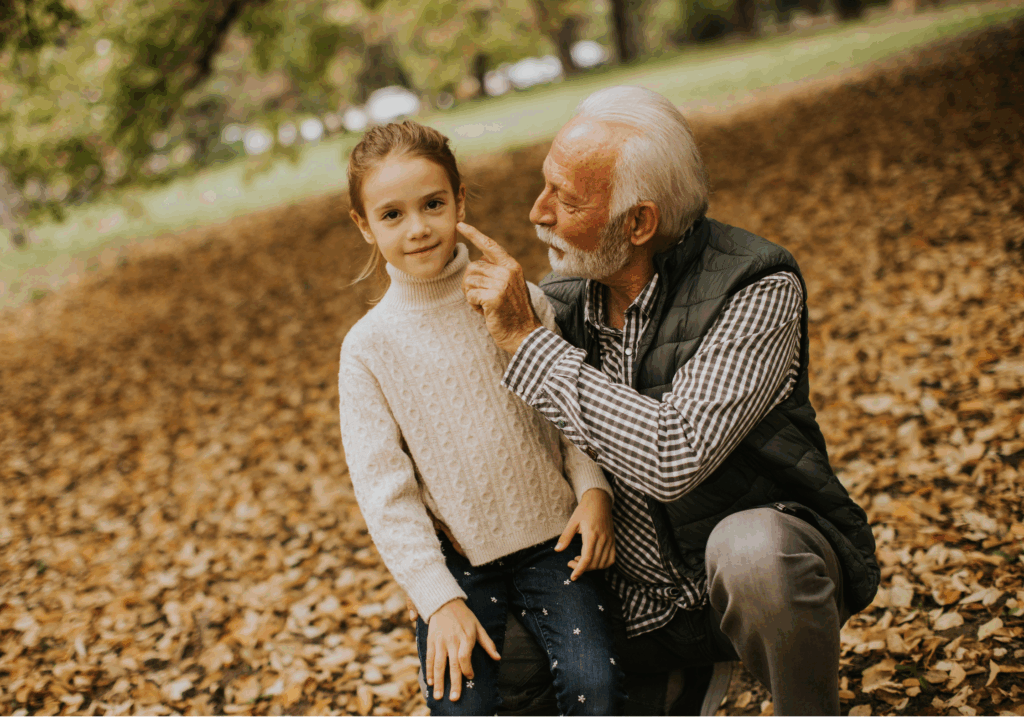
    An older grandparent with his granddaughter.

    In a day and age where tablets, phones, and digital products remain glued in the tiny hands of children, we are feeling lost as adults. How are we supposed to get kids to be kids? Are they losing social skills that we all learned from play and familial surroundings? As children, we had no choice but to mingle with our peers outside or with our elders at home. Sure, we had a television and a computer, if you’re a millennial, but for most of us, we didn’t get the same distractions with technology as our youth do today.

    Truth is those phones they’re always on are the new form of a social life. It’s a fragile area to tell a kid to put down the phone because for them, texting and social media is all they know of developing social skills. In fact, they can be missing out on those skills if they are off their phones.

    Before you get upset about that, yes, there is a limit. Luckily today parents can lock phones at certain times and place a curfew. Social media accounts can be monitored and even text messages and phone calls.

    Still, our experience of a social life is drastically changing and it’s important to know that this is the evolution of socializing. It is just as crucial to send a text to a friend as it was to walk over to your friend’s house to have some cookies their mom baked. So then, if social skills are the same in that regard, how are they different?

    Eye contact, body language, and everything else that comes with being with someone in person. That’s why balance is more needed now than ever before. If a young person’s idea of socializing is texting or facetiming, think about how that impacts seniors. Many elderly people have trouble using a phone. Thankfully they can handle a video call, but texting is more than likely out the window. Their eyes aren’t made for digital screens. Sure, they can be taught how to adapt to using them, but it is still not how they get their social lives exercised. And a senior without a social life is a senior who feels lonely.

    Kids today need to have the skills it takes to talk with seniors. Of course, that’s not on their radar. Social media has become so quick and has shortened attention spans in every user, not just children. This means that old people are very, very boring and far too slow in speech and movement to keep a child patient. Now we have a major disconnect from the younger generations to the older ones.

    Our grandparents want to be around young people – it keeps them young! If they’re lucky enough to have grandchildren, are they connecting with them? Let’s say you’re someone from the sandwich generation where you have children and you’re caring for your mom or dad. Have you noticed how your kids interact with your parents? Is it different than how you interacted with your grandparents?

  • Let Grandma Retire

    An older woman throwing up a peace sign and smiling while wearing a sun hat with a red scarf.

    We knew a grandmother once who hardly cared to be a part of her grandchildren’s lives. She had three sons and loved them all dearly.. Once her sons got married, well, naturally no daughter-in-law could replace her. Surprisingly, she wasn’t too harsh to her son’s wives. She learned to accept them and even care for them. There was only one condition: she was still to be a big part of her sons’ lives. And so she was.

    Grandchildren weren’t as special. She wasn’t neglectful, per se, just over the idea of “raising” children again. Her time has come and gone for being a parent. Often, we’d hear the sons and their wives say that no one helped them raise their kids. They’d say, “she wasn’t a grandmother. She barely called or checked in. She was hardly available when we needed help the most. We were on our own.” In fact, grandma sold her home, got an RV, and moved away to live in her retirement years away from obligations.

    Now, think about this. Was she wrong to do this? Was she awful to have not been more helpful for her sons and daughters-in-law in raising grandchildren? Was it her new role to be the parent for everyone? We see this happen to adults who have their own children young, like in their twenties. When we recall being in our twenties, we still felt like kids ourselves! We still called mom and dad for help and guidance. Add our own children to the mix and you have got a world of needs to fulfill. And you want mom and dad’s help, still.

    Here’s the thing. Our grandparents were raised fast. Their childhood was quick and over. They had to grow up and become mini adults before the age of puberty. Getting married and having children may have happened even younger than we can imagine today. This means, when they raised you, they wanted you to have more of a childhood. You didn’t have to grow up too fast – nowhere near as fast as they did. But when you decided to move out and get married and have children of your own, that was it. You were officially an adult and being raised by your mom and dad was over.

    To them, if you’re old enough to start a family of your own and care for your own house, then you shouldn’t be calling on for help every single day. It’s a hard pill to swallow. Most of us are still immature in our twenties so this is a harsh reality. However, it happens. Millennials, today, can rely on their parents a little more because their parents understand how that parental neglect while raising a family hurts them. Count yourself lucky for what you do have.

    Still, was this old grandmother wrong to dust her hands off and move away to live as freely as she wished? Not at all. She earned it. Is it unfortunate that she didn’t tend to her legacy more so? Perhaps and perhaps not. If she was content in knowing the family and generations she helped create were alive and well, then there isn’t anything wrong or immoral about that. If you’re offended by it, maybe you need to ask yourself if you’re afraid to face the reality that you are an adult now and must tend to your own outcomes of your choices. Don’t worry, though. We understand that we want the support to come from our bloodline, but that’s not always the case. And we are sorry for that. But there are a lot of support groups who are willing to share the help needed to raise children.

    Just because grandma prefers to free herself and enjoy her golden years, doesn’t mean you’re alone. Seek the help you need, because they are out there. And fall in love with the idea that the grandmother of your children is happy with how things turned out. One day you’d like to be in her shoes, too. Give her a break. She has earned this chapter in her life’s book.

  • The Romanticization of Children and Seniors

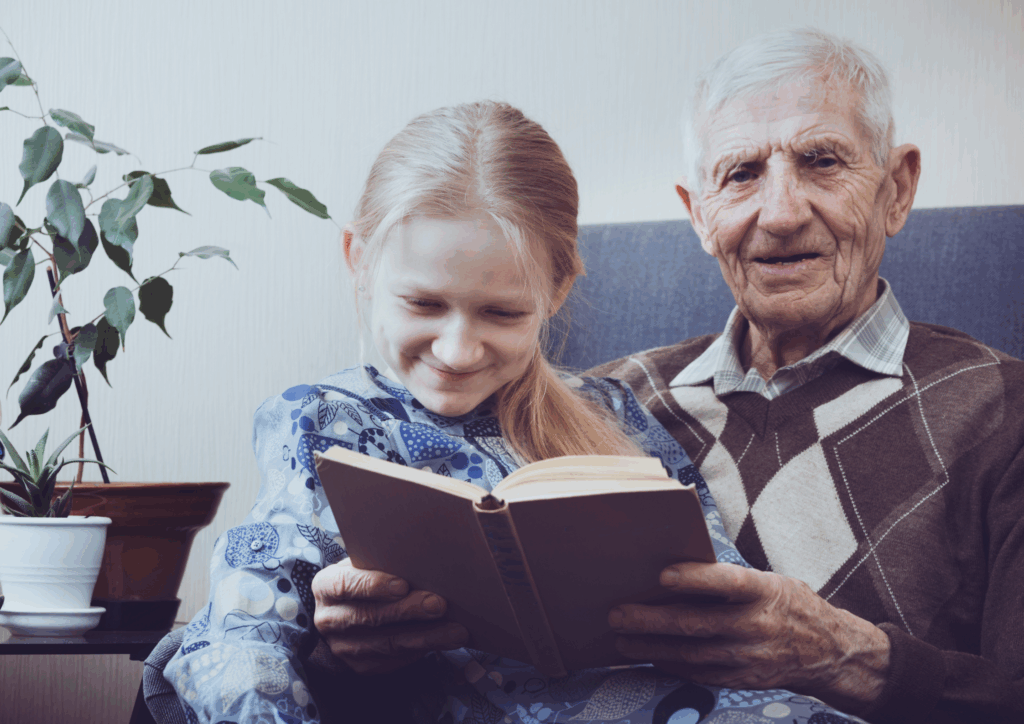
    An older grandfather reading a book with his granddaughter. Both are smiling.

    Perhaps today is the day to talk about the romanticization that the film industry puts out on senior living and the respect children back in the day had. Last night we watched a television show from 1962 that did not filter reality of being old and young. In each age group you had your rotten kid and you had your bitter grandmother. Both were conniving, manipulative, vengeful, verbally abusive, and scary to be around.

    As much as we like to paint a picture of a beautiful world where old people age gracefully and young people are pure and full of wonder, it’s best to accept that in real life, that’s not always the case. Although, it can be with some time and an open mind to change. People aren’t perfect. No two parents raise their kids the same way. And no two elderly grandparents spoil their grandchildren the same. The two worlds can be opposites.

    In one family, you have children who balance play, follow all rules, say please and thank you, hug and kiss their grandparents before doing anything else when visiting, then go to bed on time every night like little angels.

    In another family you have grandparents that live for their grandchildren and wish to see them as often as they can. They sneak cash into their grandchildren’s pockets, feed them the sweetest of treats, and say yes to anything those children ask for.

    Meanwhile, across the street, you have kids with neglectful parents or those who are abusive. Typically, these children will come to resent those around them and take actions that stimulate a response from their parents or grandparents. To be punished is to be noticed.

    Then you have the grandmother who despises her daughter-in-law and the children she gave birth to; not all children, just the one that looks like her. She makes passive-aggressive comments about how lazy her daughter-in-law is. She gossips to her visiting friends about how terrible of a mother she is. In return, she neglects her grandchildren and is strict with rules when they are near. No one, but her own son, is worthy of her love and attention. And no one in this world deserves her son’s love and attention as she does.

    These are clearly hypothetical situations and don’t occur as this. However, it has happened. And the reason we even wrote about them is because we can count on two hands the number of family situations where this has occurred in our own lives. Maybe that’s why we fantasize about positive and bright familial settings. That’s probably the reason we dream about being in grandma’s kitchen and baking a cake with her. We see ourselves with smiles from ear-to-ear, storing such fond memories of sweet scents and laughter.

    It’s okay to have been a product of a negative situation. If you were one of those kids who grew up with cold grandparents, you’re not alone. If you’re a senior who feels sad about how your grandkids turned out, you’re not alone, either. It’s still perfectly normal to envision fantasies. And surely, there must be at least one or two beautiful moments within your family that you can take to heart and keep forever. If you are one of these people, stick around and find an article that makes you happy. Get insights into shows we watch that make us smile, like the Twilight Zone’s Kick the Can episode.

    Although it isn’t all sunshine and rainbows, it’s nice to know there are films and real-life stories out there that make us feel normal. Thankfully, black-and-white films don’t always hide the truth. It’s good to know we have people like Boris Karloff and Rod Serling who shed light on the truths and mysteries of our existence as humans. The imagination can be a wonderful place to live and can heal even the deepest wounds.

  • The Old Woman We Met for 15 Minutes

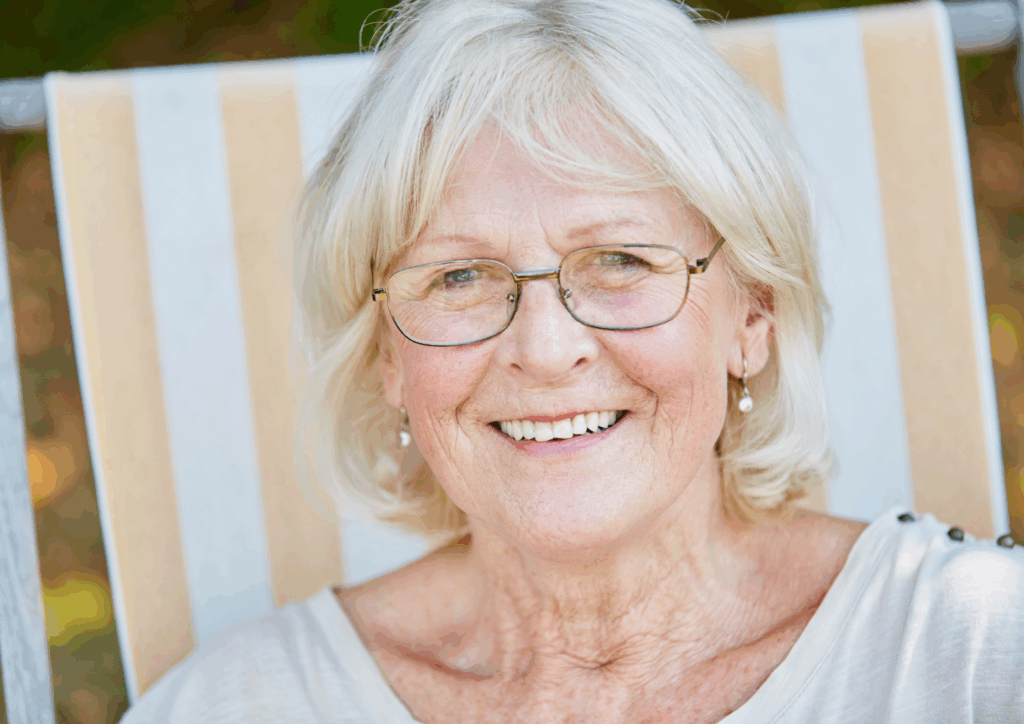
    An older woman with glasses smiling at the camera.

    There’s a visual we can’t get out of our heads. We grew up with a “grandmother” on every street. Most of these elderly people were once neighbors in Portugal who immigrated to the States living near each other. This meant that as kids, we had an aunt and grandmother at every corner.

    As streets were safer in the eighties and early nineties where we grew up, we’d play outside for hours, with the ability to take our bikes within a mile or two from home. No matter where we ventured, there would be someone who knew us waiting to invite us in for lemonade and cookies. Our parents didn’t need to serve us lunch, as that was always taken care of – when we were hungry, someone nearby would feed us and feed us well.

    One of our best friends didn’t live near us, but her great aunt did. When she came over to play, we’d ride our bikes and play kickball or hide-and-seek on the streets several blocks away from our home. One day our friend asked if we’d like to go see if her great aunt had a snack to satisfy our hunger. Back east you would hardly use someone’s front door, as that was left for solicitors. We’d travel to the backyard and find a door that led either downstairs to a finished basement, or upstairs to the main living area (usually a kitchen, first).

    On this occasion we went to the basement where our friend’s great aunt was making lemonade from scratch. We didn’t need an invitation – she held a mindset to always expect a visitor every day – at least it seemed that way – and she prepared food as if those thoughts would come true. That seemed to work, because we popped in unexpectedly where she had goodies ready to serve.

    We remember her face lit up as she turned around to see us. As a Catholic widow, she was dressed in all black – black loafers, black nylons, a long black skirt, a black blouse, and a black cardigan. Her hair was white and grey, brought up into a bun at the top of her head, with wispy tendrils framing her face. Her eyes were cloudy, probably from cataracts, and the skin around her face was aged and wrinkled. Her hands shook as she served us a plate of biscuits and brought over the pitcher of lemonade.

    We don’t recall her sitting to have a conversation with us. Our friend and we talked about the games we played and the games we’d still play. The old woman never once interrupted us or demanded us to work or be anything other than what we were in that moment. We’d like to think she simply appreciated the visit and that was all she needed.

    We never saw her again after that one and only visit. Strange how something so quick and random in one day of our youth has become a vivid memory. All we remember is that this woman was so kind and gentle. She was peaceful to be around, yet very old. As kids, her age did not scare us. Dressed in all black, one could’ve easily spread a tale that she was a witch conjuring up a poison in her lemonade cauldron. However, the air around her was calming and made us feel like we were her grandchildren. She didn’t ask who we were. She just loved that we were there.

    This old woman probably had no idea how much of an impact she made on our memory. She probably never thought twice about how much she made us feel welcome. Perhaps that experience was more selfish for her than it was generous. Not in a negative way, but in a way that she felt at peace sharing her generosity and home even for a moment, to even strangers. That she could sleep better that night knowing she was surrounded by happy children.

    Despite our other blogs about negative situations between children and seniors, this is a real moment that happened to us that validates why this site exists. This isn’t some grand story. It only served as merely 15 minutes in our entire lives! Yet it held some much power and left us with a beautiful fantasy of what being old can be like.

    As kids, we didn’t realize how wonderful this snack break had been. Not until now, as adults, have we found appreciation in that moment. Which tells us that every day we have an opportunity to leave someone a beautiful memory. Even though they may not recall it until decades later, we still have the power to warm up someone’s heart for the rest of their lives. This old woman whom we met for a brief moment, had taught us one of the most important lessons in life: treat others, always, how you’d like to be treated, but do so with the acceptance that you may never know the impact your kindness made.

  • A Matriarch’s Beauty

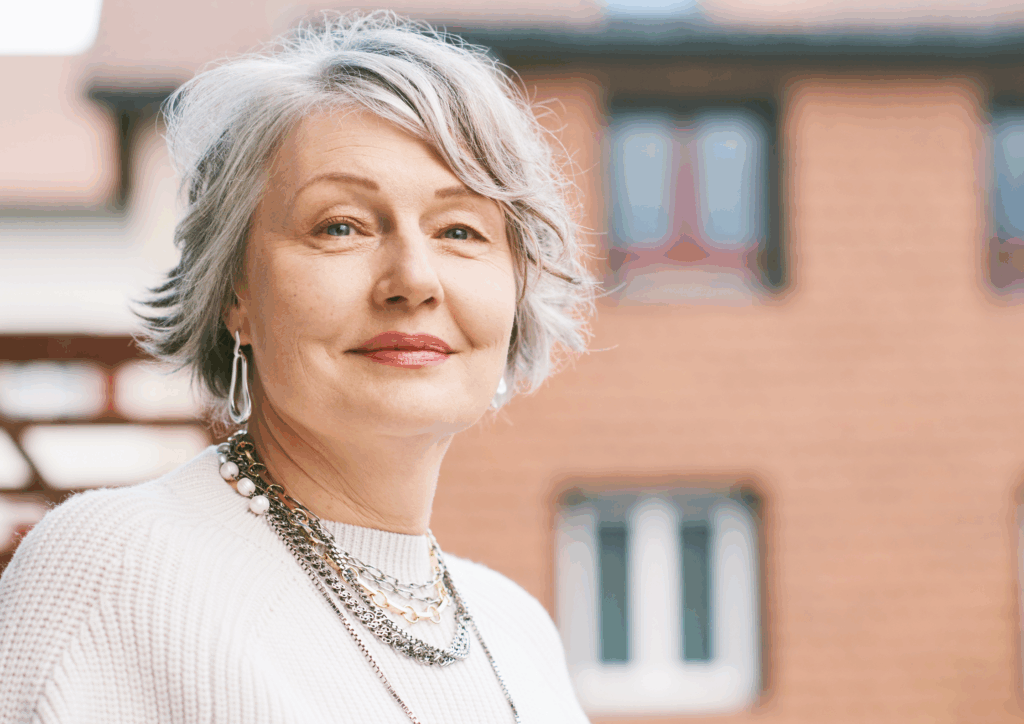
    An older woman with a necklace looking back toward the camera.

    We were once very stubborn in the lessons our matriarchs taught us. We have an aunt who took great pride in her bath rituals. A mother who always wore sunscreen. A great aunt who added a simple accessory to make even the blandest outfit look chic. And a grandmother who knew the power of a trademark perfume. Often, we hear stories about aunts, grandmothers, and mothers who took self-care to the next level. Their hair was always done. Their makeup was effortlessly put on in such a natural yet glamourous way. Their nails were neat and clean. Their skin was dewy and youthful with a bright glow.

    How did they do it? With raising kids and no internet to act as a babysitter, how did our matriarchs look so well put together? And how’d they make us look so cute, too?

    When we were little girls, we borrowed our mother’s Avon samples and practiced our own makeup during playtime. Of course, blue eyeshadow smudged on your lips doesn’t look good unless it’s Halloween, but we didn’t care. We felt beautiful and we did our best mimicking what our own mother did in the mirror.

    That aunt who loved baths? She had creams for years on her vanity for every part of her body. When we visited around Christmas time, the youngest of us girls would go and doll ourselves up with her secret potions hoping to get skin as dewy as our aunt’s. When our aunt came to check on us, she smiled and taught us a few lessons on how to appropriately apply her skincare products. As teenagers, we soaked the knowledge up. As adults surrounded by social media trends, we seemed to throw out all our matriarch’s advice.

    Hundreds of dollars later and products filling every cabinet and drawer, we still aren’t achieving the same appearance as the women in our family. Our makeup still can’t look as good as our mother’s Avon products. We’ve been tricked and wasted so much money trying to achieve what our matriarch’s already locked in. Why? Because marketing and filters make us believe that today’s products can perform miracles compared to back in the day.

    This couldn’t be far from the truth. One lesson we learned recently was when we got Rosacea. We tried every name brand formula to help heal our skin concerns, and they were expensive. Then we saw a Dermatologist, and they said a gentle natural cleanser at night with a splash of tepid water only for the morning. What? You mean we aren’t supposed to put on ten different serums morning and night? Nope. And believe it or not, our skin is less dry and inflamed.

    It took a Dermatologist to remind us of what our matriarchs taught us those years ago. Do less, achieve more and get better results. It’s not about the cost of products. Much of it has to do with application. And looking at our matriarchs today, we can see that all those efforts worked. Now, in their 60’s, 70’s and 80’s, we are still jealous of how well they aged and how great their skin and hair look.

    Never ignore the beauty advice from the women in your family. They know more than social media. Believe us, this will save you so much time and money.